

The Hidden Animal Crisis in Remote Lebanese Villages
The treatment of stray animals (especially dogs) in Lebanon is horrendous in general. However, there are still some extremely abusive and unethical practices that occur mainly in rural areas, rather than populous cities. In this article, we will list some outdated beliefs and practices that still occur in Lebanese villages today, as well as the reasons for them and suggested solutions.
Stoning
This practice is unfortunately all too common. In Lebanese villages, children are often taught from a young age to throw stones at strays. Injuries ranging from mild to severe affect strays due to this supposed “protective” measure.
Shooting
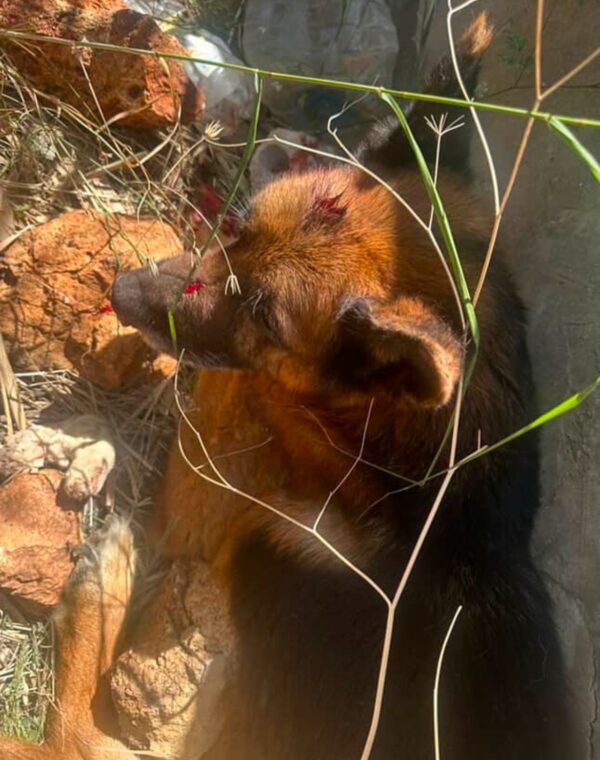
A similar but more severe measure than stoning, the shooting of strays is all too common in Lebanese villages. The number of shot GMAP dogs rescued from Lebanese villages can prove this. Shooting stray animals not only fatally injures them (depending on the type of bullet), but can also lead to permanent paralysis, blindness, or death. This is illegal in Lebanese law, but many citizens choose to ignore this fact.
Poisoning
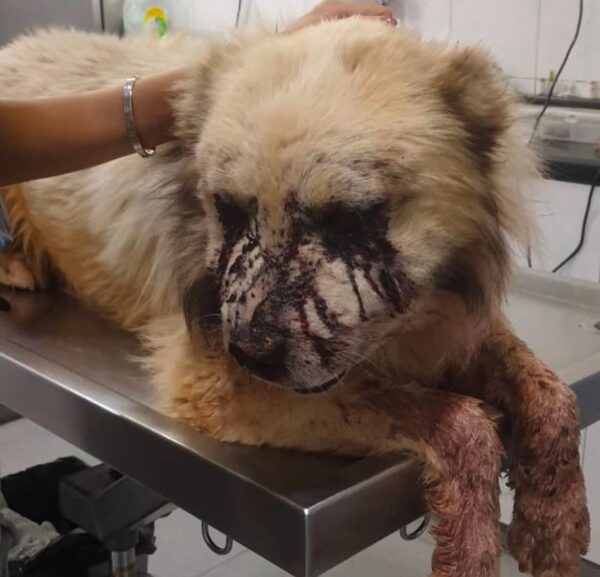
Municipalities and individuals in Lebanese villages often poison dogs. Here, poisoning is used as a form of population control. Rather than tackling the stray problem with more humane measures, such as TNR, some citizens and members of the government take it upon themselves to inflict unnecessary and elongated pain and suffering upon hundreds of innocent animals. Dogs and cats writhe in agony for hours, foaming at the mouth and vomiting their innards in an excruciating death. They tremble, whimper, and howl or moan in pain. Poison left on the streets or in public spaces can also kill pets and other animals.
Ear Cropping
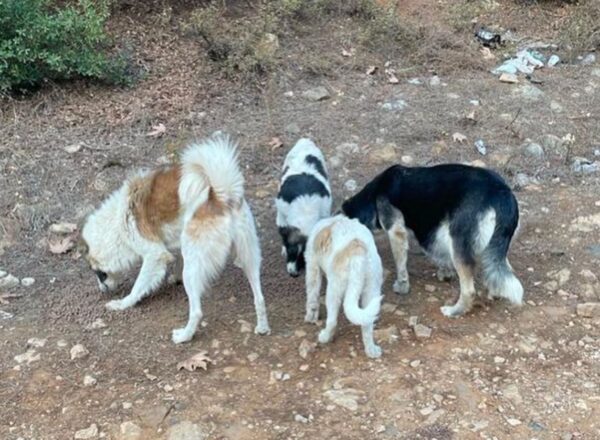
Shepherds in Lebanese villages believe that their herding dogs will perform better, or be more “protective” if their ears are cut. This is not only untrue, but also extremely harmful and painful to their dogs. They often use knives or crude tools to cut the ears off, leading to extreme pain, potential infections, and even long-lasting damage or injuries.

Chaining
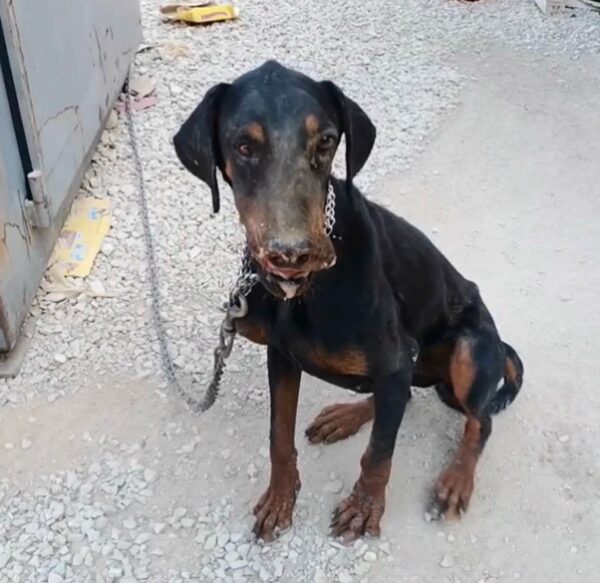
Dogs in Lebanese villages are often left chained outside. Chaining dogs 24/7 is extremely damaging to a dog’s physical and mental health. When dogs are chained for that long, their natural mobility is restricted, leading to physical ailments. They can choke to death from tugging too hard on their collars. Wild animals or other dogs can also attack, injure, and kill tied dogs. Moreover, their mental health declines due to boredom and lack of socialization.
Dogs are not allowed inside
Similar to chaining, dogs in Lebanese villages are seldom allowed inside the house. Some are provided with very poorly insulated dog houses, while others are simply left out in the open. Heat and cold are extremely dangerous to dogs, and they can get extremely ill from severe weather and exposure to the elements, even if they do not die. However, deaths due to frostbite or heat stroke are not unheard of. Outdoor animals can also easily get dehydrated.
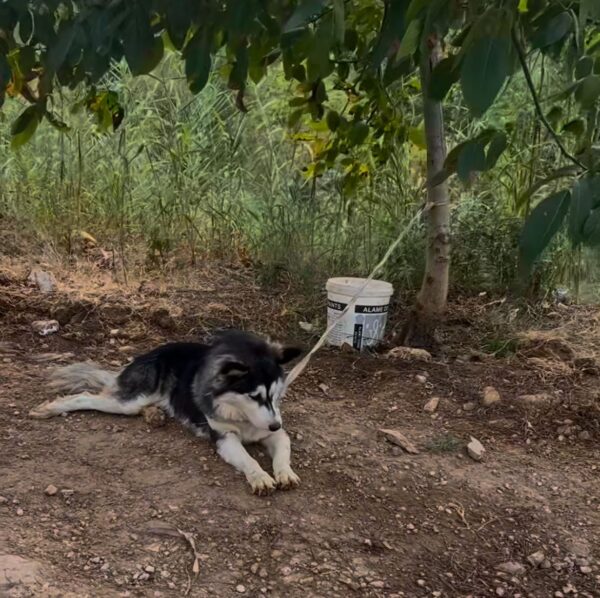
Superstitions about strays are still all too common
Many people in Lebanese villages believe that every dog (and every canine by extension) is a carrier of the rabies virus, so they behave very harshly and try to eliminate any stray dogs they encounter. This is of course untrue and extremely cruel. Additionally, certain beliefs about the color, size, and general morphology of certain dogs perpetuate stereotypes and false narratives among villagers, leading to further violence against specific animals. For example, large black dogs are the most feared, and hence receive the most discrimination.

We hope you have learned more about the types of abuse that stray animals (especially dogs) face in remote Lebanese villages. Now, we will counter each point listed above with a solution:
- Give strays their space. If you do closely encounter one, there is absolutely no need for physical violence.
- Shooting any living being is never okay. A peaceful solution can be found no matter the issue someone has with a stray.
- Instead of poisoning, encourage each village to control its population of strays with TNR. This can be done with the help of the municipality as well as an NGO.
- The mutilation of any living being is never okay, and herding dogs will do just as well (or even better) when treated with love, kindness, and left intact and healthy.
- Chaining any dog for a long period is never okay. If the dog must be confined due to safety reasons, a fenced yard or space where he or she can run freely is the ideal solution.
- Dogs must be allowed indoor access, or at least have a warm, dry, and safe space to sleep in in order to remain healthy and happy.
- Spread this article and/ or create an educational campaign to make villagers and the Lebanese population in general more aware of these false and harmful superstitions.